United Arab Emirates
Where frankincense smoke rises beneath glass spires that scrape the clouds.
The United Arab Emirates is a federation of seven emirates located on the southeastern coast of the Arabian Peninsula, serving as a global crossroads for trade, culture, and diplomacy. Once a collection of pearl-diving sheikhdoms under British protection, it transformed in the latter half of the 20th century into one of the world's most dynamic economic powerhouses through strategic oil wealth management and visionary modernization.
Today, the UAE stands as a beacon of futuristic architecture and cultural tolerance in the Middle East, balancing deep-rooted Bedouin traditions with hyper-modern urbanism. It plays a pivotal role in regional stability, acting as a major hub for aviation, logistics, and renewable energy initiatives while fostering an open society that attracts millions of expatriates from over 200 nationalities.
- Capital
- Abu Dhabi
- Region
- Western Asia
- Languages
- Arabic
- Currency
- United Arab Emirates dirham
- Area
- 83,600 km²
- Emirates
- 7 (Abu Dhabi, Dubai, Sharjah, Ajman, Umm Al Quwain, Ras Al Khaimah, Fujairah)
- Official Language
- Arabic
- Religion
- Islam (State Religion), with significant Christian, Hindu, and other minorities
- Geography
- Desert plains, coastal mangroves, and the Hajar Mountains
Lore & Background
Between 1971 and today, seven tribal sheikhdoms stitched together their destinies into a federation that shocked the world with its speed of ascent. Oil revenues didn't just build roads—they funded free education, advanced healthcare systems, and a deliberate pivot away from hydrocarbon dependence before the rest of the Gulf even arrived at that conversation. The leadership courted foreign expertise while preserving Emirati identity, creating a hybrid governance model where Bedouin councils inform technocratic policy. While the nation has launched ambitious space missions like the Hope Probe to Mars, these are currently dispatched from international launch sites rather than its own soil; meanwhile, massive solar farms sprawl across their deserts, and neutral diplomacy keeps them engaged in regional conflicts without becoming entangled.
In Their Own Story
The call to prayer echoes softly over the dunes of the Liwa Desert, a sound that has remained unchanged for centuries. A few kilometers away, the silhouette of the Burj Khalifa pierces the twilight sky, its glass facade reflecting the last golden rays of the sun. An old fisherman in a white kandura sips sweet tea on a wooden bench in Sharjah's heritage village, watching a drone deliver a package to a rooftop garden in Dubai. In this land where time seems to fold over itself, the scent of frankincense mingles with jet fuel, and the rhythm of the past dances seamlessly with the pulse of tomorrow.
Reader's Guide
The United Arab Emirates is a federation of seven distinct emirates, each contributing its own character to the nation's identity.
Abu Dhabi, the capital, anchors the union with grand mosques like the Sheikh Zayed Grand Mosque and a robust cultural sector including the Louvre Abu Dhabi. Dubai, the most populous emirate, is synonymous with record-breaking architecture, luxury shopping, and a cosmopolitan lifestyle that welcomes visitors from every corner of the globe.
The smaller emirates offer quieter authenticity: Sharjah preserves heritage through museums and traditional souks; Ras Al Khaimah commands rugged Hajar Mountain vistas and ancient forts; Fujairah faces the Gulf of Oman with pristine beaches and historic watchtowers. The remaining two—Ajman and Umm Al Quwain—maintain intimate, family-run atmospheres where old fishing harbors still operate alongside modern developments.
Geographically, the country is dominated by vast sand dunes and arid plains, yet it boasts a rugged eastern coastline along the Gulf of Oman featuring the majestic Hajar Mountains. The climate is hot and humid in summer (often exceeding 45°C/113°F), while winters offer mild, pleasant weather ideal for exploring outdoor markets and desert safaris. Culturally, the UAE is a mosaic where Emirati traditions of hospitality and family honor coexist with a vast expatriate population that shapes its daily life.
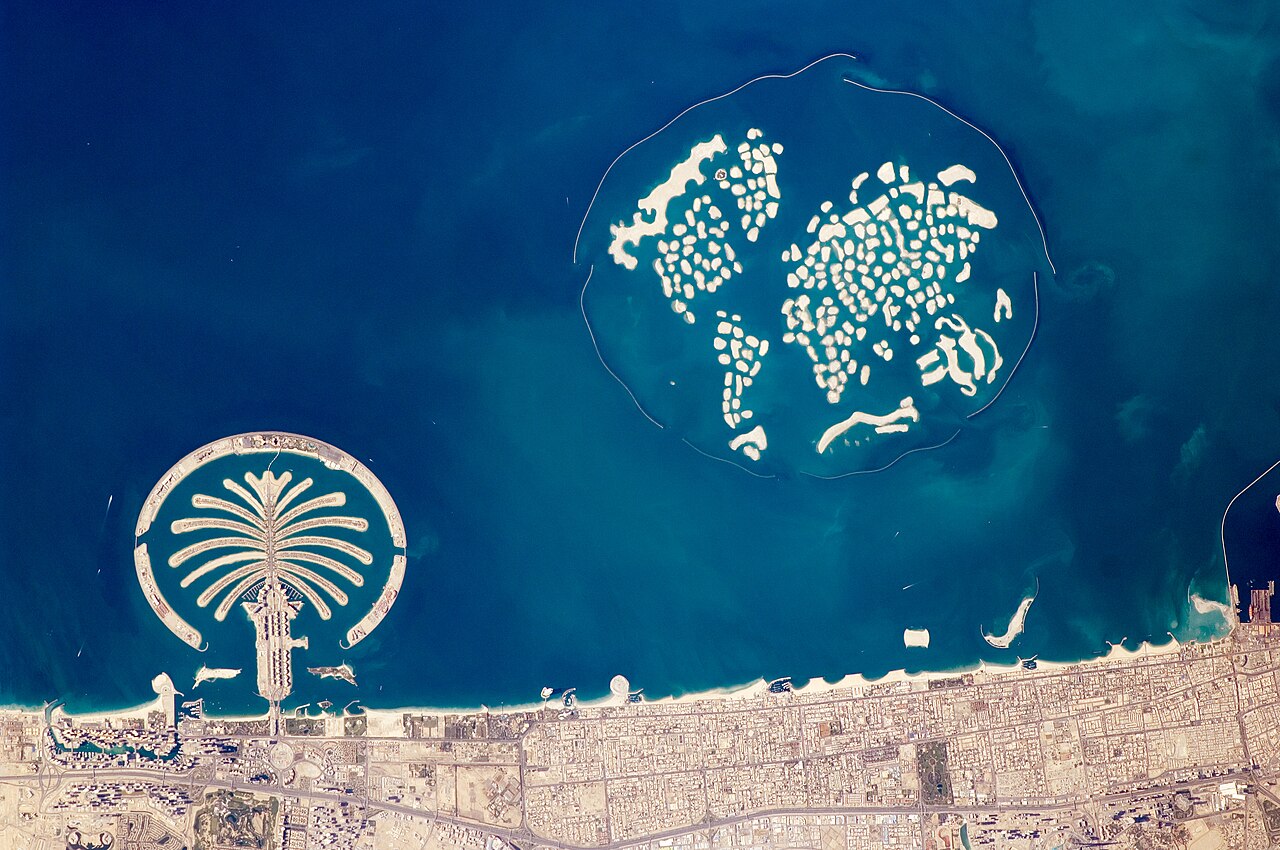
Distinctive landmarks range from the man-made Palm Jumeirah islands to the historic Al Jahili Fort in Al Ain. The nation has successfully positioned itself as a regional gateway for business, tourism, and cultural exchange while protecting its Islamic and Arab heritage through legal frameworks and national programs.
Did You Know?
- The UAE operates one of the world's most diverse workforces—over 80% of residents are expatriates from more than 200 countries, yet Emirati citizens hold key government and strategic positions.
- Dubai is home to the world's tallest building, the Burj Khalifa (828 meters/2,717 feet)—so tall that its upper floors experience different weather conditions than the ground below.
- The country hosts one of the largest man-made island projects globally: The World Islands, an archipelago shaped like a map of the world. However, contrary to popular myth, these islands are too small and low-lying to be
- Arabic coffee (Gahwa) isn't just a drink—it's a ritual. Serving it with dates is mandatory hospitality; refusing without good reason can be considered offensive to the host.
- The UAE completed its Mars Hope Probe mission in 2021, making it the first Arab nation to reach another planet and study its atmosphere.
Ancient Origins and Human Dispersal
The United Arab Emirates boasts a profound history of human habitation stretching back an astonishing 125,000 years, serving as a critical corridor for early humans migrating from Africa to populate the globe. Archaeological discoveries at Jebel Faya provide the earliest evidence of anatomically modern humans in the region, featuring lithic tools like hand-axes and scrapers that closely resemble those used by contemporary populations in East Africa. These findings, dated via thermoluminescence, suggest that humanity left the African continent much earlier than previously believed. The area later supported diverse communities ranging from Paleolithic nomads to Neolithic pastoralists who thrived until the fourth millennium BCE. This ancient landscape was not merely a transit route but a vibrant zone where early societies developed complex interactions with their environment, leaving behind a rich archaeological record that includes tombs and artifacts spanning multiple eras, now preserved at sites like Sharjah's Mleiha Archaeological Centre.
Bronze Age Trade and Cultural Exchange
During the Bronze Age, the region was home to the Magan people, a civilization known to ancient Sumerians for its extensive trade networks. These early inhabitants established vital commercial links with the Harappan culture of the Indus Valley, as well as with Afghanistan, Bactria, and the Levant, transforming the area into a significant economic hub. Following the Neolithic era's environmental challenges, the Hafit period marked a resurgence of settlement characterized by distinctive beehive-shaped tombs found across mountainous regions like Jebel Hafit. Pottery discovered from this time reveals continued trading connections with Mesopotamia during the Jemdat Nasr period. As local pottery manufacturing emerged around 2800 BCE, the region solidified its role as a center of cultural exchange and economic activity, laying the groundwork for future maritime dominance in the Arabian Gulf.
Islamic Era Commerce and Colonial Encounters
Following Islamization in the 7th century, the UAE re-emerged as a pivotal trade center, with ports like Julfar, Dibba, and Khor Fakkan becoming integral to the Eastern Arab trading network. These locations facilitated an Arab monopoly on commerce between Europe and the East, operating under the influence of the Kingdom of Hormuz. However, this dominance faced severe disruption in the early 16th century when Portuguese forces, led by Afonso de Albuquerque, invaded the region. Their aggression dismantled existing trade networks and sparked regional conflicts that weakened Arab control over Eastern commerce. Subsequent tensions between local maritime communities and British powers culminated in the sacking of Ras Al Khaimah, leading to a series of treaties starting in 1820. These agreements established the coastal rulers as semi-protectorates under British influence, earning them the designation 'Trucial States' while altering the geopolitical landscape of the Persian Gulf.
Formation and Independence of the Federation
The path to modern statehood began with a pivotal decision by Britain in early 1968 to withdraw from its involvement in the Trucial States. In response, Sheikh Zayed bin Sultan Al Nahyan of Abu Dhabi and Sheikh Rashid bin Saeed Al Maktoum of Dubai initiated discussions to form a unified federation. Their historic handshake on February 18, 1968, inside a desert tent symbolized the commitment to unity among the emirates. Subsequent meetings with other Trucial rulers, alongside Bahrain and Qatar, led to a joint announcement on February 27 proposing 'The Federation of the Arab Emirates.' This diplomatic effort culminated in full independence from Britain on December 2, 1971, when six emirates declared their union. Ras Al Khaimah joined shortly after in February 1972, completing the formation of the United Arab Emirates as a sovereign nation built on cooperation and shared vision.
Gallery